Getting your place ready for storm season
Nine things worth doing before the first east coast low, and the two maintenance failures that turn a covered storm claim into a declined one.
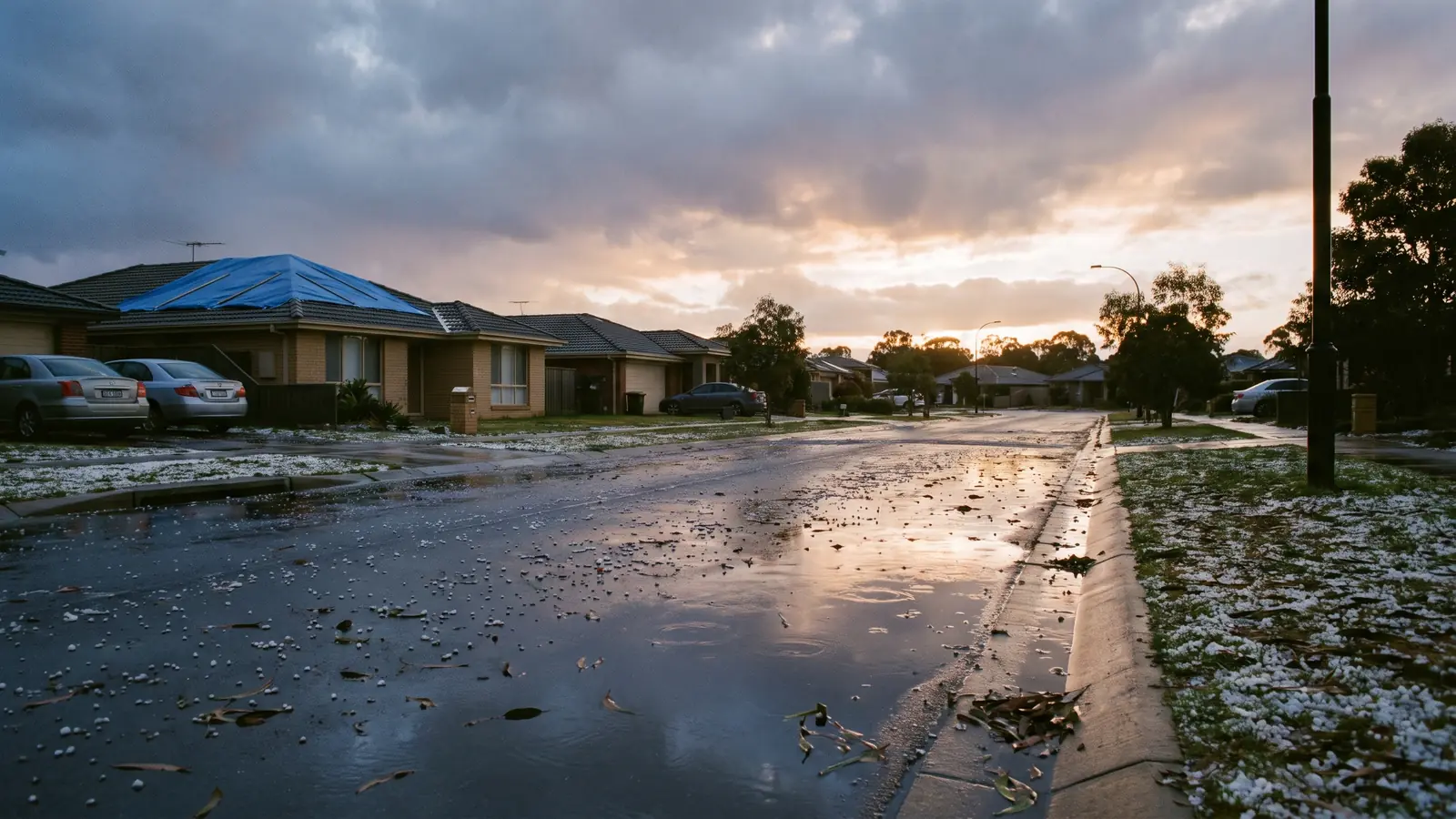
Storm and hail causes more home insurance claims in Australia than fire, flood and theft combined. Most of that damage arrives between October and March, most of it in a handful of hours, and a meaningful share of it would not have happened if somebody had spent a Saturday morning on a ladder in September.
This is the list our assessors would give you if you asked them over a beer, ordered by how often the failure turns up in a claim file.
The two maintenance failures that turn a covered claim into a declined one
Every home policy in this country, ours included, excludes damage caused by a lack of maintenance. That exclusion is not there to catch people out. It is there because insurance prices a sudden and unforeseen event, and a gutter that has not been cleared since 2021 is neither sudden nor unforeseen. Two failures account for most of the declines we see.
Blocked gutters and downpipes
Water that cannot leave the roof goes into the eaves, down the cavity and into the ceiling. The resulting damage looks exactly like storm damage, and an assessor will find the leaf litter in about ninety seconds. Clear them before storm season and again after any big leaf drop. If you have gums overhanging the roof, twice a year is a minimum.
Trees nobody has looked at
A tree that falls and damages the house is covered. Removing a tree that is obviously dead, leaning or rotten, before it falls, is maintenance. If an arborist would tell you that limb needed to come off, and you left it, expect an argument. Get the limb removed and keep the invoice.
The nine things worth doing in September
- Clear the gutters, downpipes and any box gutter. Box gutters on additions are the single most common hidden failure point.
- Check the roof for lifted or slipped tiles and for rusted or loose sheet fixings. Do it from a ladder at the edge, not by walking on tiles.
- Have overhanging limbs cut back to at least three metres from the roof line, and any dead limb removed entirely.
- Secure the loose things. Trampolines, outdoor furniture, umbrellas and bins become projectiles at 90 kilometres an hour and the damage they do to a neighbour is your liability.
- Check the seals on skylights and roof windows. Perished silicone is a five dollar fix in spring and a ceiling replacement in January.
- Clear the stormwater pits and the grated drain in the driveway. Flash flooding into a garage almost always starts at a blocked pit.
- Photograph every room and the contents of the garage and shed. Ten minutes on your phone, stored somewhere that is not in the house.
- Check your sum insured. Building costs moved a long way between 2021 and 2024. A figure set before that is very likely short.
- Put the claims number in your phone. Ours is 1300 767 844 and it is answered 24 hours a day.
What to do in the hour after
Make yourself safe first. If there is water near switchboards or fallen powerlines, ring 000 and then your electricity distributor, and stay away from it. Insurance is a later problem.
Once it is safe, take photographs before you move anything, including wide shots that show where the damage sits in the room. Then ring your insurer and lodge. You do not need quotes, you do not need a scope, and you do not need to have worked out what it will cost. Lodging starts make safe, which is the emergency work that stops the damage getting worse, and it should be arranged within 24 hours.
Do not throw damaged items out before an assessor has seen them or told you it is fine to. Photographs help, but a bin run on the Sunday afternoon is the most common reason a contents claim gets reduced.
Keep receipts for anything you buy to make the place liveable: a tarp, a fan, a night in a motel. Those are usually recoverable, and they are much easier to recover with a receipt than with a memory.
If a catastrophe is declared
After a major event the Insurance Council of Australia declares an insurance catastrophe for the affected postcodes. When that happens, assessment is prioritised by vulnerability and severity rather than by who lodged first, make safe proceeds without any approval step, and policies in those postcodes are protected from cancellation for non-payment for twelve months. You do not need to ask for any of that. It applies automatically.